

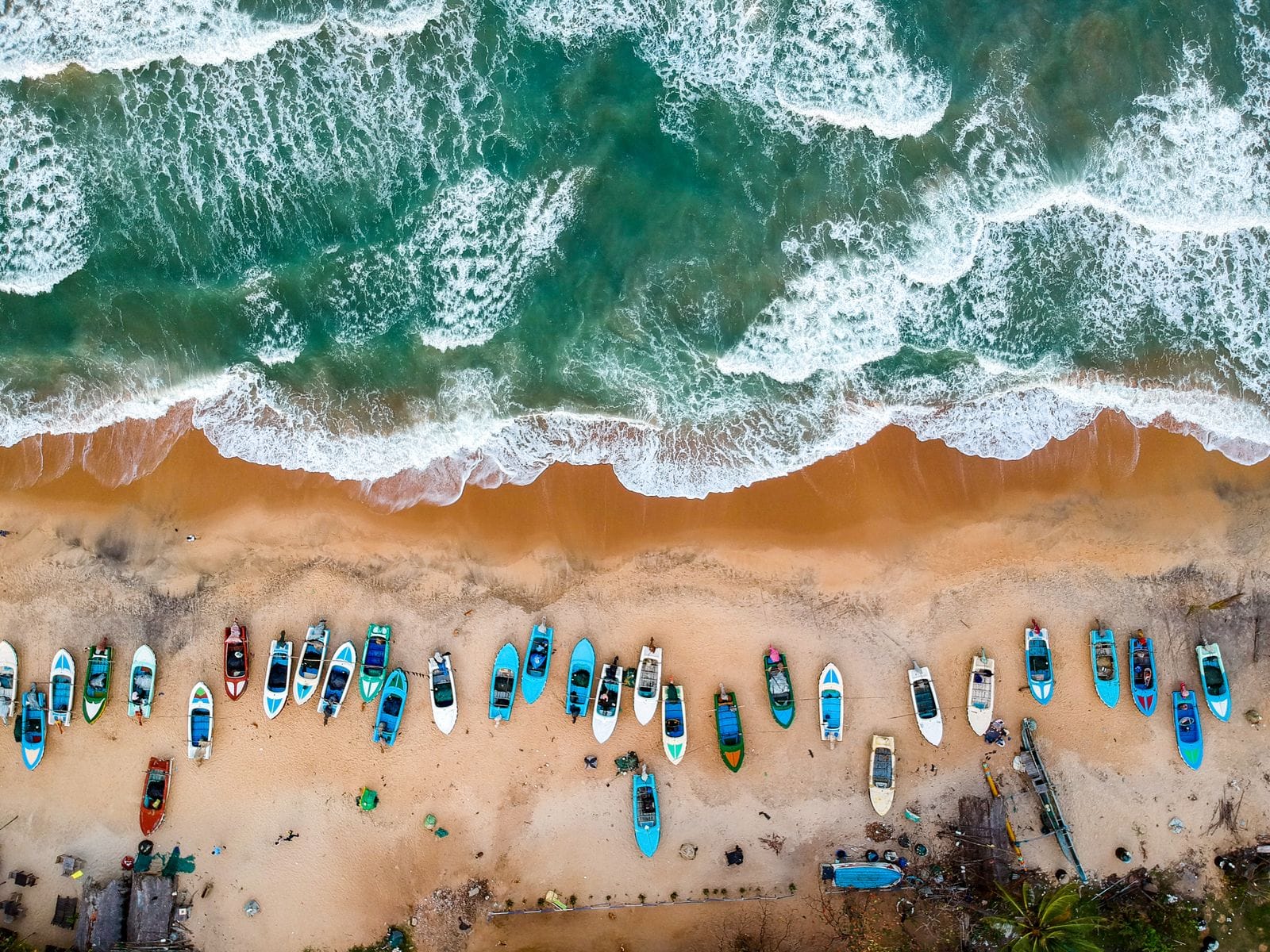
Arugam Bay is known as Sri Lanka's surf town, and from May to September the point breaks are the reason most people come. But you do not need a board to enjoy this corner of the east coast. Behind the beach are lagoons full of birds and crocodiles, a national park with elephants and far fewer jeeps than Yala, and a long, empty beach at Pottuvil where the sunrise belongs to you and a few fishermen.
This guide is for the non-surfer, the partner of a surfer, or the surfer on a flat day.
Dawn on the lagoon
The Pottuvil lagoon lies just north of town. Local fishermen pole flat wooden boats across it at first light, slipping between mangroves while kingfishers, egrets, painted storks and the occasional sea eagle work the shallows. Crocodiles are common; elephants come down to drink at the edges in the dry months. Trips last around two hours and are arranged through guesthouses or at the lagoon landing. Go at dawn rather than dusk: the light is better and the mosquitoes are fewer.
Kumana National Park
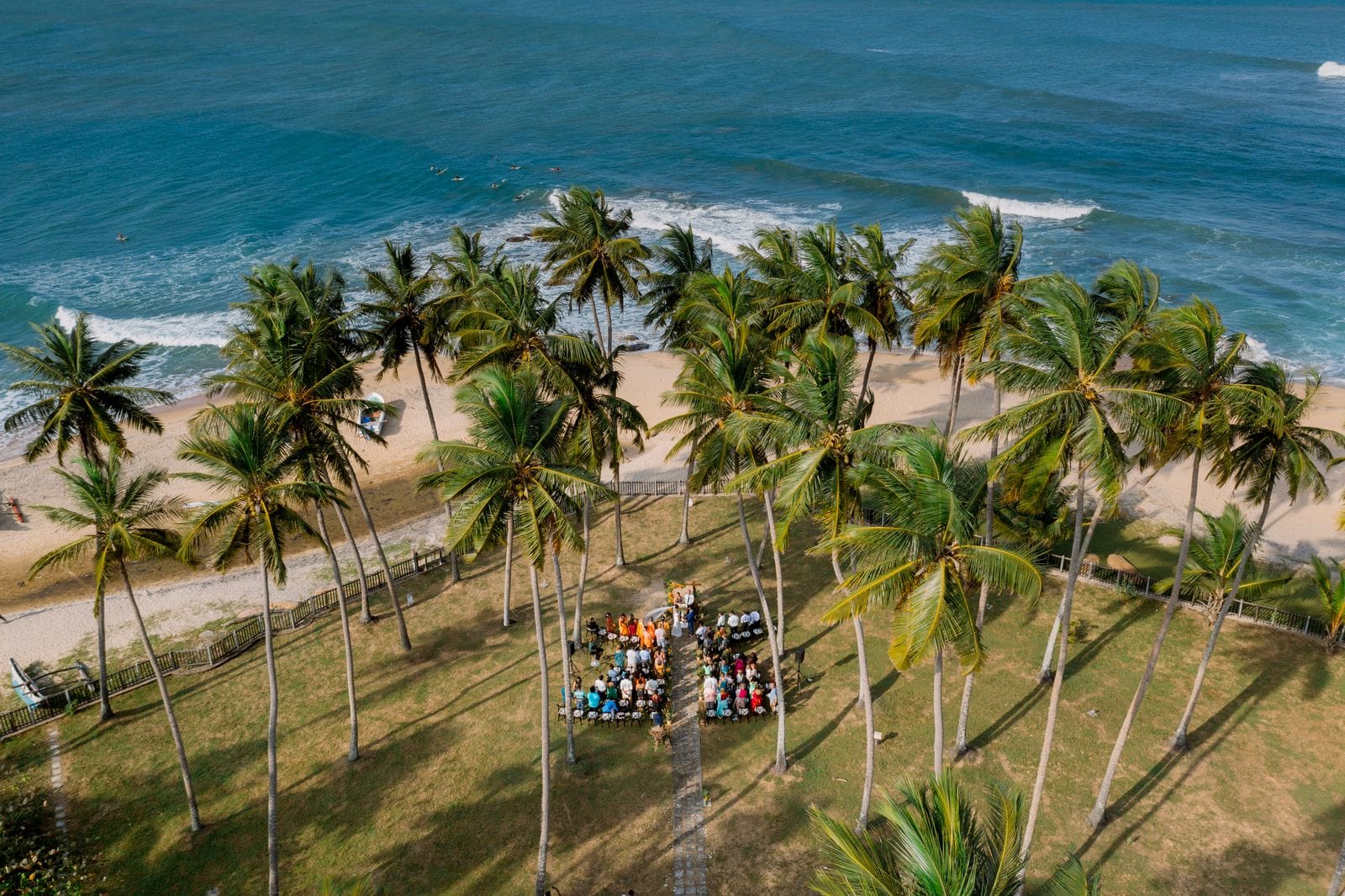
Half an hour south of Arugam Bay, Kumana is the eastern continuation of Yala, with the same elephants, leopards and water birds but a fraction of the traffic. The Kumana villu, a mangrove-fringed lagoon inside the park, is one of the island's best bird sites between May and July, when pelicans, storks and herons nest there. Leopard sightings are less frequent than in Yala's crowded Block 1, but when you see one you will usually have it to yourself. Park entry for foreign adults is about US$25 plus 18% tax, jeeps are hired in Arugam Bay or at the gate, and the park opens from 6am to 6pm with no night drives.
Pottuvil beach and Muhudu Maha Viharaya
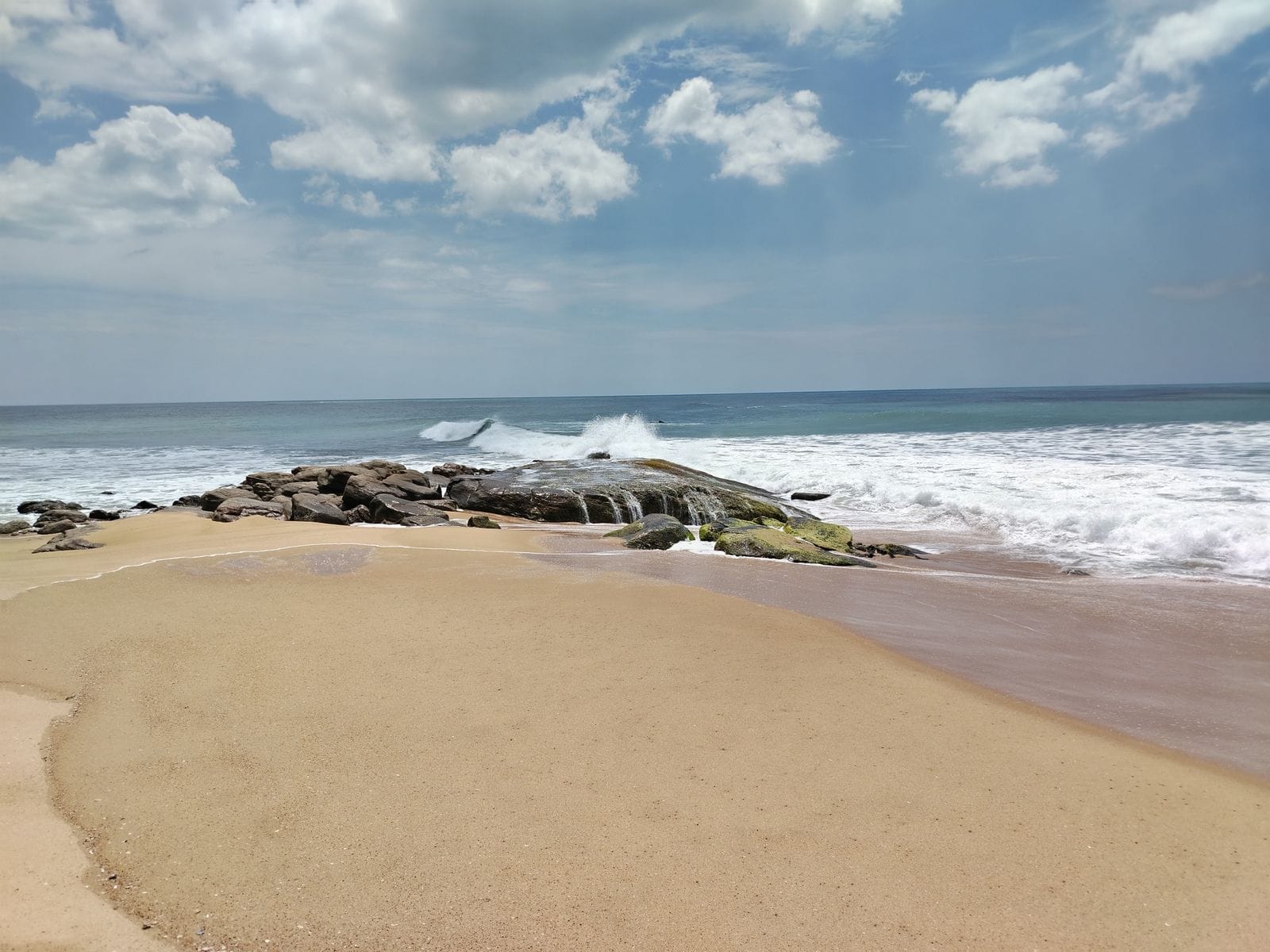
Pottuvil, the town four kilometres north of Arugam Bay, has its own beach: wide, windswept and almost empty. At its southern end, half buried in the dunes, stand the ruins of Muhudu Maha Viharaya, a Buddhist temple said to date back some two thousand years, with weathered stone figures looking out to sea. It is a short tuk-tuk ride from Arugam Bay and best in the soft light of late afternoon.
Elephant Rock and the points
South of town, Elephant Rock is a headland shaped like its name, with a short scramble to the top for a view along the coast. Wild elephants sometimes cross the scrub behind it in the evening, which is why tuk-tuk drivers like to leave before dark. The surf points beyond it, Peanut Farm and Okanda, are also fine beaches for a swim on calm days and for watching surfers from the sand.
When to go
Arugam Bay's season is roughly April to October, when the east coast is dry. July and August are the busiest months. Outside the season many cafés and guesthouses close and the lagoon trips may stop when the water is high.
Getting there
- From Colombo by bus: buses run to Pottuvil, about seven to eight hours, including an overnight service that leaves in the evening and arrives around dawn. From Pottuvil it is a short tuk-tuk ride to Arugam Bay.
- By car: about seven hours from Colombo, or around six from Kandy.
- Train and bus: take the train to Batticaloa, then a bus or car south along the coast, about three hours.
Frequently Asked Questions
Is Arugam Bay worth visiting if I don't surf?
Yes. Lagoon boat trips, Kumana National Park, Pottuvil's empty beach and ancient temple, and sunset at Elephant Rock fill several days without a board.
How is Kumana different from Yala?
Kumana is the quieter eastern part of the same wilderness. It has the same wildlife and outstanding birdlife, with far fewer jeeps, and it is only about 30 minutes from Arugam Bay.
When is the best time to visit Arugam Bay?
April to October, when the east coast is dry. July and August are busiest; May, June and September are quieter with the same weather.
How do I get to Arugam Bay from Colombo?
By bus to Pottuvil in about seven to eight hours, including an overnight service, then a tuk-tuk to Arugam Bay. A private car takes about seven hours.


