

For many Indian families, Sri Lanka is not a foreign country in the stories they grew up with. It is Lanka: the island where Ravana ruled, where Sita waited in the Ashok Vatika, and where Hanuman leapt across the sea. Today you can visit the places that local tradition links to the Ramayana, from a riverside temple in the hills to a waterfall named after Ravana himself.
This guide covers the main sites, a practical route, and what to know before you go. The links between these places and the epic come from belief and local tradition, and that is exactly what makes them special to visit.
The main Ramayana sites
Seetha Amman Temple, Seetha Eliya
The most important stop sits about 5 km from Nuwara Eliya on the road towards Hakgala. Devotees believe this is where Sita was held in the Ashok Vatika and where she prayed daily for Rama to come. The colourful temple stands beside a stream, and marks on the rocks across the water are said to be Hanuman's footprints. Families often offer a puja here, and the cool hill air makes it a calm, moving place to sit for a while.
Hakgala Botanical Garden
A short drive further on, Hakgala's gardens are linked by tradition to the wider Ashok Vatika. Today it is a beautifully kept garden of roses, ferns and old trees under a dramatic rock face, and a pleasant walk after the temple.
Divurumpola, near Welimada
Divurumpola is believed to be where Sita underwent the agni pariksha, the trial by fire, to prove her purity. It is now a Buddhist temple, and the name itself is understood to mean "place of oath". Local people still come here to settle disputes by taking oaths, which shows how alive the story remains.
Ravana Falls and Ravana Cave, Ella
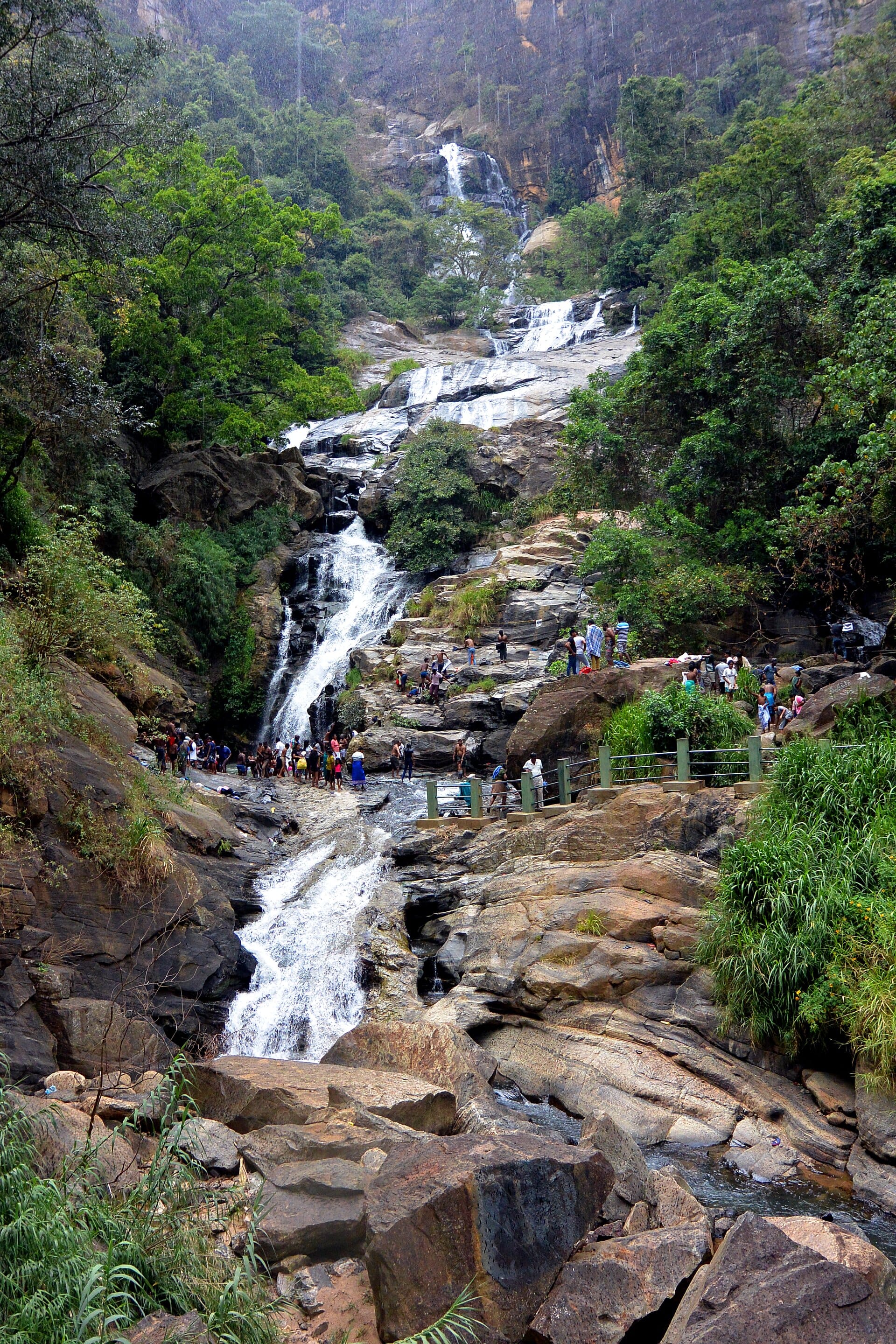
On the road from Ella to Wellawaya, Ravana Falls drops in layers over the rocks right beside the road. Tradition says Sita bathed in the pool here. Above Ella town, the Ravana Cave is linked to the story that Ravana hid Sita in caves and tunnels across the hills. The cave involves a steep climb of several hundred steps, so take water and good shoes.
Sri Bhakta Hanuman Temple, Ramboda
On the Kandy to Nuwara Eliya road, the Hanuman temple at Ramboda is built where Hanuman is believed to have rested while searching for Sita. The views over the tea country and waterfalls are worth the stop on their own.
Munneswaram and Manavari, near Chilaw
On the west coast, Munneswaram is one of Sri Lanka's oldest Shiva temples. Tradition says Rama worshipped Shiva here after the war, seeking release from the sin of killing Ravana. Nearby Manavari is believed to hold the first lingam installed by Rama. Both are an easy day trip from Colombo or Negombo.
Kelaniya and Rama Setu
Just outside Colombo, the Kelaniya Raja Maha Vihara is associated with the crowning of Vibhishana, Ravana's brother, after the war. In the far north-west, Mannar faces the chain of shoals between India and Sri Lanka known as Rama Setu or Adam's Bridge. It is a long trip, so most visitors add it only if they are also visiting Jaffna.
A six-day route
- Day 1: Arrive in Colombo. Visit Kelaniya in the evening.
- Day 2: Day trip to Munneswaram and Manavari, back to Colombo or Negombo.
- Day 3: Drive to Kandy, about 3 to 4 hours.
- Day 4: Kandy to Nuwara Eliya via the Ramboda Hanuman temple.
- Day 5: Seetha Amman Temple and Hakgala in the morning, Divurumpola in the afternoon, then on to Ella.
- Day 6: Ravana Falls and Ravana Cave, then return towards Colombo or continue south.
A private car with a driver is the easiest way to link these sites, especially for families with elders. If you plan to use the scenic hill-country train, note that as of October 2026 there is no through train between Kandy and Ella while the Kandy to Nanu Oya section is repaired. Trains still run between Nanu Oya and Ella. Check Sri Lanka Railways before you go.
Practical tips for Indian travellers
- Visa: Indian passport holders get a free ETA. Apply online at eta.gov.lk before you travel.
- Getting there: Many Indian cities have direct flights to Colombo. From Tamil Nadu you can also take the ferry from Nagapattinam to Kankesanthurai near Jaffna.
- Food: Vegetarian food is easy to find, and South Indian-style dosa, idli and vadai are common. Many temples serve simple prasadam.
- Temple manners: Remove shoes, cover shoulders and knees, and ask before photographing inside shrines.
- Weather: Nuwara Eliya is cool all year, often below 15°C at night, so pack a warm layer. January to April is usually the driest time in the hills.
- Money: Sri Lankan rupees are used everywhere. One US dollar is roughly LKR 300.
Frequently Asked Questions
How many days do I need for the Ramayana Trail?
Five to seven days covers the main sites in the hill country and on the west coast at a comfortable pace. Add two or three days if you want to include Mannar or Jaffna in the north.
Is the Ramayana Trail suitable for elderly parents?
Most temples are easy to reach by car with only a short walk. Ravana Cave is the exception, with a steep climb of several hundred steps, so elders can enjoy Ravana Falls from the roadside instead.
Do Indians need a visa for Sri Lanka?
Indian citizens need an ETA, which is currently free. Apply online at eta.gov.lk before travel. The tourist ETA gives 30 days with double entry.
What is the best time to visit?
January to April is generally dry and pleasant in the hills. The trail can be done all year, but expect afternoon rain from May onwards in the central highlands.


