

Quick answer: Sri Lankan cuisine centers on rice and curry: rice served with several small curries (vegetables, dhal, fish or meat) cooked with coconut milk, roasted curry powder, chili and cinnamon, plus sambols such as pol sambol. Hoppers, string hoppers and pittu are breakfast staples, kottu roti is the classic street food, and many dishes are spicy.
The Flavors That Define the Island
Sri Lankan cuisine bursts with aromatic spices, creamy coconut milk and fresh tropical ingredients. The story begins with rice and curry: a plate of steamed rice surrounded by vegetable, lentil and meat curries, each seasoned with a blend of cinnamon, black pepper, turmeric and dried chilies. Coconut cream adds silkiness, while lime juice supplies a bright finish. Influences from Arab traders, Indian neighbors and Portuguese colonizers mingle in every bite. Whether you’re tearing into a warm pol roti (coconut flatbread) or a delicate hopper, the island’s food invites you to explore its history through flavor.
Sri Lankan Dishes to Try
| Dish | What it is | When it’s eaten |
|---|---|---|
| Rice and curry | Rice with several curries, dhal and sambols | Lunch, often dinner |
| Hoppers (appa) | Bowl-shaped pancakes of fermented rice flour and coconut milk, plain or with an egg | Breakfast or evening |
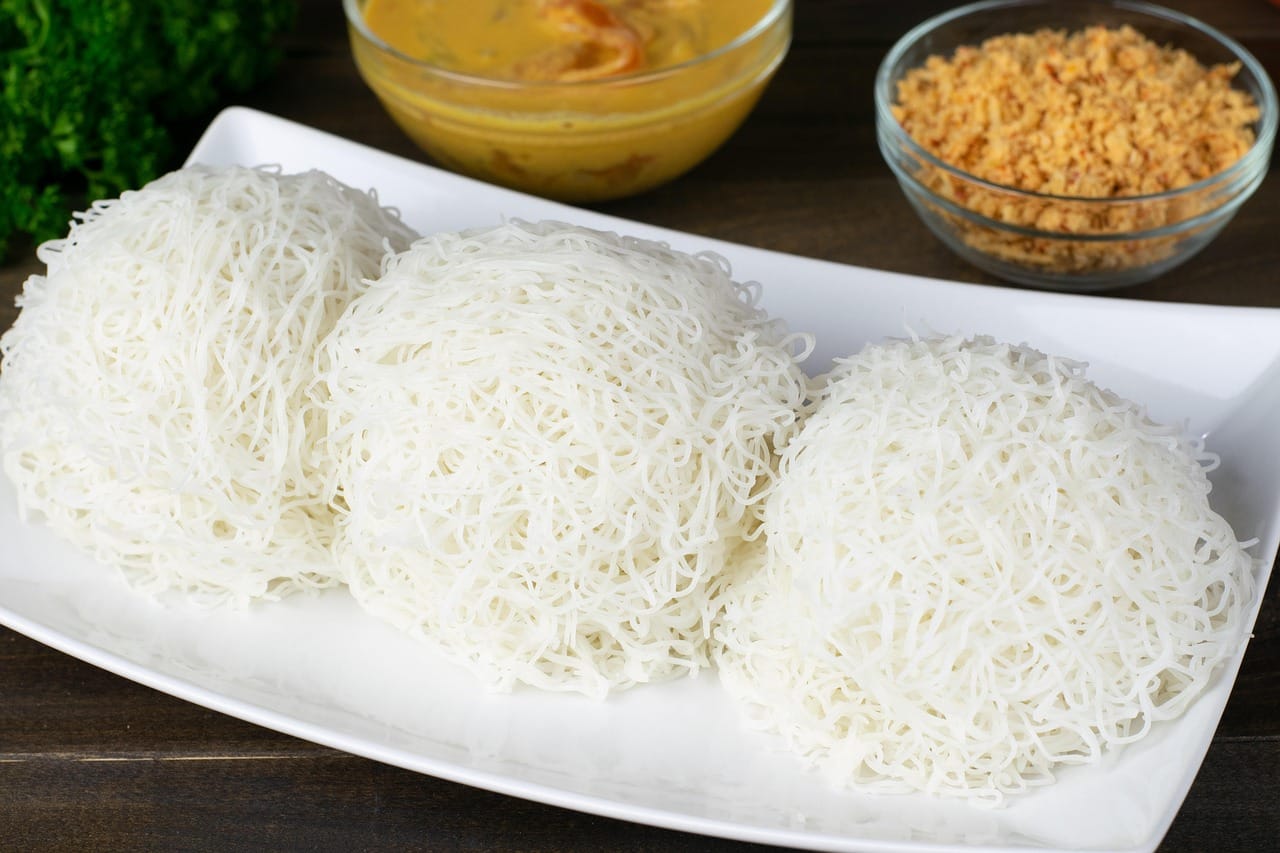
| String hoppers (idiyappam) | Steamed nests of rice-flour noodles | Breakfast or dinner, with curry and pol sambol |
| Pittu | Steamed cylinders of rice flour and grated coconut | Breakfast, with coconut milk and curry |
| Kottu roti | Chopped flatbread stir-fried on a griddle with vegetables, egg or meat | Evening street food |
| Pol sambol | Fresh grated coconut with chili, onion and lime | A side with most meals |
| Watalappan | Steamed custard of coconut milk, jaggery and eggs | Dessert, especially at celebrations |
Rice and Curry: The National Spread
Rice and curry is not a single dish but a collection of flavors on one plate. A mound of white or red rice sits at the center, flanked by several curries: a fiery crab or fish curry, a mellow coconut-milk vegetable curry and a mild, creamy dhal (lentil) curry. Accompaniments such as pol sambol (spicy coconut relish), seeni sambol (sweet onion relish) and crisp papadam add texture and contrast. The meal reflects Sri Lanka’s agricultural bounty: coconut palms, spice gardens and abundant seafood. Whether you sit down in a local household or a roadside eatery, expect the plate to be colorful, aromatic and designed for sharing.
Hoppers, String Hoppers, Pittu and Kottu Roti
Hoppers (appa) are bowl-shaped pancakes made from fermented rice flour and coconut milk, crisp at the edges and soft in the center. A cracked egg atop a plain hopper (egg hopper) offers a silky surprise. String hoppers (idiyappam) are delicate nests of steamed rice noodles, perfect for soaking up coconut curries. Pittu, steamed cylinders of rice flour and grated coconut, is another savory breakfast staple, usually eaten with coconut milk and curry. Kottu roti, the best-known Sri Lankan street food, is chopped flatbread stir-fried with vegetables, eggs and meat on a hot griddle, where the cook rhythmically chops and mixes the ingredients.
The Spice Cabinet: Cinnamon, Pepper, Goraka and More
Sri Lanka is the native home of true cinnamon (Cinnamomum verum), the sweet, delicate bark sold as Ceylon cinnamon that flavors desserts, teas and savory dishes alike. Black pepper, grown in the central hills, adds heat without overwhelming. Lesser-known ingredients such as goraka (a sour fruit), pandan leaf and Maldives fish (dried, cured tuna) deepen the flavor. Jaggery made from kithul palm sap lends caramel-rich sweetness to sweets and some curries. Spices are often roasted and ground into a dark curry powder, a fragrant blend that forms the backbone of many island dishes. The careful balance of sweet, sour, hot and umami makes Sri Lankan food a study in harmony.
Regional Highlights: From Negombo’s Coastal Bounty to Ella’s Highland Herbs
Negombo, a bustling coastal town near Bandaranaike International Airport, Sri Lanka’s main airport, offers an abundance of seafood. Fresh fish, prawns and crab are cooked with coconut milk, tamarind and chilies, in dishes like crab curry and fried fish with pol sambol. The town’s fish market offers a glimpse into daily island life. In contrast, Ella’s misty highlands showcase cooler-climate vegetables and aromatic herbs. Here you’ll find beetroot curry, pumpkin curry and fresh greens such as gotu kola, often paired with simple rice and dhal.
Sweet Treats: Aluwa, Kokis, Bibikkan and Watalappan
Sri Lankan sweets celebrate coconut, jaggery and spice. Aluwa are diamond-shaped sweets made from rice flour, often with treacle or jaggery, while bibikkan is a dense, spiced cake of grated coconut and jaggery or treacle. Kokis are crisp, deep-fried snacks of rice flour and coconut milk, shaped with a flower-like mold. Watalappan, a steamed custard of coconut milk, jaggery and eggs spiced with cardamom, is a favorite at Eid celebrations. Kokis and aluwa are traditional at the Sinhala and Tamil New Year in April, and many of these sweets appear at festivals and family celebrations.
Dining Etiquette: Sharing, Hand-Eating and Tipping
When invited to a Sri Lankan home, expect to eat with your right hand, sharing dishes from communal plates. It’s polite to try a bit of everything, showing respect for the host’s effort. Restaurants and hotels commonly add a 10% service charge to the bill. Beyond that, tipping in Sri Lanka is modest: about LKR 300 (US$1) a day for housekeeping or LKR 100–200 per bag for porters is appreciated, and US$5–10 a day is usual for a driver.
Where to Sample Authentic Flavors
In Negombo, visit the fish market early in the morning to see the day’s catch, then look for a local eatery serving fish curry with string hoppers. The town’s beachfront restaurants serve seafood such as crab curry and fried fish with pol sambol. In Ella, cafés and guesthouses serve hoppers for breakfast, and many guesthouses cook home-style rice and curry. In the hill country, a tea factory visit usually ends with a tasting of freshly made Ceylon tea.
Vegetarian and Vegan Options
Sri Lankan cuisine suits vegetarian and vegan diets well. Many curries are built on lentils, beans and vegetables such as eggplant, okra and pumpkin, simmered in coconut milk and spices. If you avoid fish entirely, ask whether a dish contains Maldives fish, which is often added to vegetable curries and sambols, including pol sambol.
Bringing It Home: Cooking Classes and Market Tours
Cooking classes, such as those in Kandy, usually start with a guided market visit that introduces local ingredients: fresh coconut, fragrant spices and tropical fruit. You then grind spices, scrape coconut and cook a rice-and-curry spread, learning to balance sweet, sour and spicy elements. It’s an easy way to take a taste of Sri Lanka back to your own kitchen.
How to Start Exploring Sri Lankan Food
Start with a rice-and-curry lunch, try hoppers or string hoppers for breakfast and kottu roti in the evening, and finish with watalappan. If you prefer milder food, ask for “less chili”: the coconut and spices still carry the flavor.
FAQ
What are the main ingredients in Sri Lankan curries?
Sri Lankan curries rely on coconut milk or cream, a blend of roasted spices (cinnamon, pepper, cardamom, cloves), lime juice, and often Maldives fish for umami. Fresh vegetables, lentils, or seafood are added according to the specific curry, creating a layered flavor profile that balances richness and brightness.
How does Sri Lankan food differ from Indian cuisine?
The two share many spices, but Sri Lankan cooking uses more coconut (milk, cream and freshly grated), a dark roasted curry powder, sour goraka or tamarind, and Maldives fish for depth. Rice with several small curries is the everyday main meal.
Is Sri Lankan food very spicy?
Spice levels vary. Traditional dishes can be hot, especially seafood curries and certain sambols, but many restaurants adjust heat on request. If you prefer milder fare, ask for “less chili” and enjoy the aromatic herbs and coconut base that still deliver depth without overwhelming heat.
What should I wear when visiting a local home for a meal?
Dress modestly and comfortably: light cotton shirts, skirts, or trousers are ideal. Remove shoes before entering the home if requested, and bring a small gift such as fruit or sweets as a courteous gesture of appreciation.
Where can I find authentic hoppers in Ella?
Many guesthouses and local cafés in Ella serve hoppers for breakfast or in the evening. The batter is fermented in advance, so if your guesthouse makes them, ask the day before; egg hoppers cooked to order are the classic choice.
Are there vegetarian options in Negombo?
Yes. As across Sri Lanka, rice and curry in Negombo is easy to order vegetarian, with dhal, vegetable curries and sambols as standard. Ask for no Maldives fish, which is often added to vegetable dishes and pol sambol.
Do restaurants in Sri Lanka add a service charge?
Yes. A 10% service charge is commonly added to restaurant and hotel bills, so check the bill before you tip. Any extra tip is optional, and small amounts for good service are appreciated.